Victor Frankenstein
Pale, dark-haired, withdrawn, and quietly rich. He studies in New York, fills his rooftop studio with male nudes, and brings a handsome man to life through art. His first response is shame.
Dream cast · Timothée Chalamet
A young-adult Gothic tragedy where art becomes flesh—and what Victor wants to deny becomes impossible to escape.
The logline. When a brilliant young artist abandons the abomination he brought to life, he must protect his friends, family, and the woman he loves from an enemy with superhuman speed and strength.
Damian Wampler’s screenplay updates the mechanism of creation but restores the novel’s difficult human relationships: the sheltered boy at university, the family’s adopted bride, the best friend, the wrongfully accused servant, the unfinished female companion, and the terrible promise of a wedding-night return.
There is psychological horror, physical danger, romance, class conflict, and an unusually intimate confrontation between a young male artist and the man he could not stop drawing.
A restless art student, not a middle-aged scientist.
Images, isolation, desire—and creation.
Train windows, rooftops, studios, an inherited estate.
Planned monochrome Gothic, modern and immediate.
Mary Shelley, unprotected
Why does Victor create a man, then recoil when he finally meets him? Why does a family that calls itself kind repeatedly sacrifice people with less power? Why does the Creature return at the threshold of marriage? Why does Victor nearly create a woman before denying her the right to exist?
“The truly frightening experiment is not making life. It is deciding what kind of life deserves to be loved.”
Damian Wampler’s THE MONSTER is an openly interpretive adaptation. It returns the sexuality, gender politics, and economics of Mary Shelley’s Frankenstein to the center of its Gothic nightmare. It also changes the setting and gives Victor the power of a painter. It is faithful to the discomfort of the book, not to every period detail.
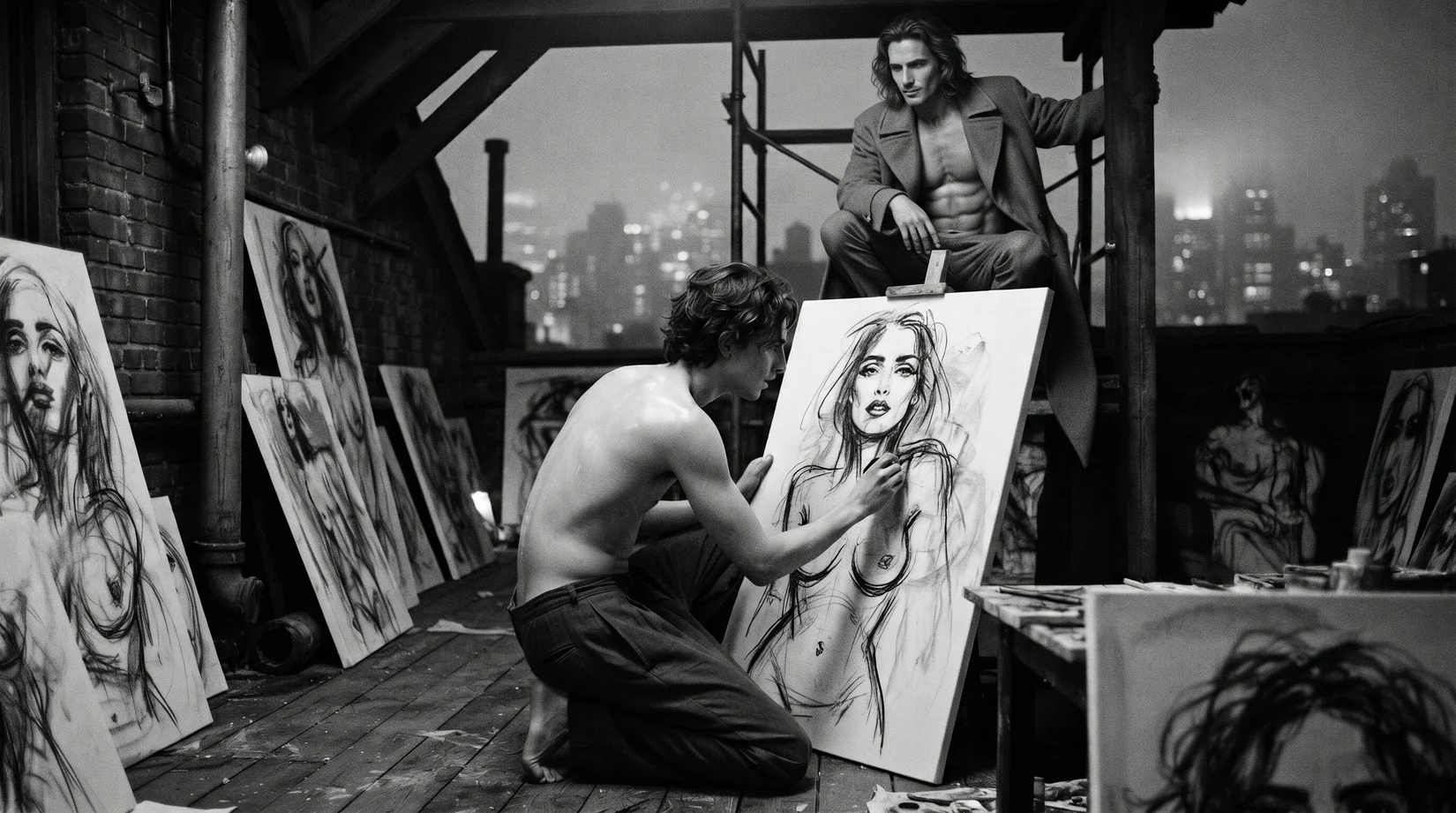 Visual development / Damian Wampler — The Monster / Not a production still
Characters drawn from the revised screenplay. Their actions, relationships, and backgrounds are not identical to every version of Shelley’s novel.
Pale, dark-haired, withdrawn, and quietly rich. He studies in New York, fills his rooftop studio with male nudes, and brings a handsome man to life through art. His first response is shame.
Large, beautiful, dangerously fast, and capable of terrifying violence. He wants recognition from the young man who drew him; beauty cannot save him from abandonment.
Blonde, adored, brought into the household, and bound to Victor by love and his mother’s final wish. The wedding is both a promise of belonging and a trap.
An athletic, charming Latino teen with an open heart. He knows Victor’s family, rescues Victor in illness, and pays for the intimacy of their friendship.
Latina, economically vulnerable, and raised near the Frankenstein fortune without its protections. The justice system turns on her when wealth needs someone to blame.
Wealthy, polished, persuasive. A father who truly loves his family, yet trusts power, philanthropy, and money to hold the world together.
Tired of trust-fund privilege. He follows the human evidence and begins to suspect that Victor might be the real monster.
Her death and her photograph preside over the story. She is Victor’s grief, the family’s lost ideal, and the image no one can quite set free.
Never brought to life. Her unfinished image becomes the central argument over whose desires count, and who gets to refuse the future chosen for her.
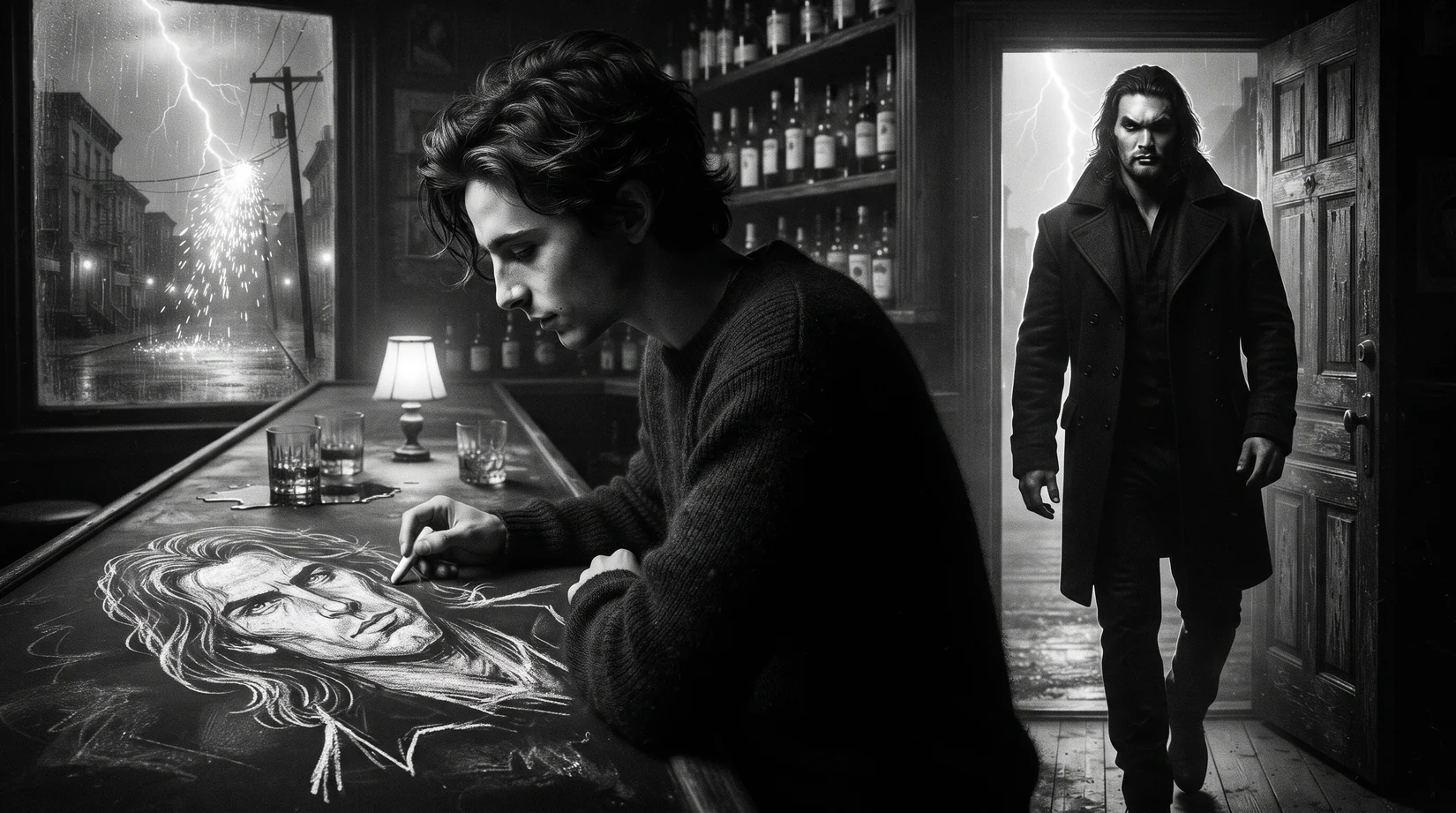
The art-school imagery is not decoration. It is the mechanism of terror. Victor spends years sketching bodies; when a beautiful man steps from his drawing, he discovers the difference between an object of fascination and a human being who can make demands.
A creative target list designed to communicate tone and character. This is not a cast announcement, and there is no implied affiliation or participation by any named actor.
The 18-year-old artist. Clever, anxious, privileged, and terrified of his own creation.
Top first-choice concept: beautiful, tall, European, unnerving. A breakout-sized part.
The blonde romantic ideal brought into the family, loved and expected to become Victor’s bride.
The young woman made expendable by class and institutional prejudice. Zendaya is the first-choice dream cast.
A skeptical investigator tired of wealthy families writing their own rules.
Victor’s wealthy father: charm, philanthropy, control, and a devastating legacy.
Victor’s dead mother; a presence in family photography, memory, and grief.
Victor’s athletic, charismatic, emotionally intuitive best friend. First choice: Josh Andrés Rivera (The Hunger Games: The Ballad of Songbirds & Snakes). Backup: Xolo Maridueña (Cobra Kai, Blue Beetle). Also considered: Diego Tinoco (On My Block).
Important: Every performer listed is an aspirational casting choice only. No roles are offered or accepted and no negotiations or endorsements are implied. Actor-like concept imagery is illustrative only.
In Shelley’s novel, Victor makes most of a female companion, then destroys her before animation. She never speaks, chooses, refuses, or breathes. That is the scene. It asks who controls reproduction and whether a creator can erase someone because she might refuse the future planned for her.
Branagh changes it to the resurrection of Elizabeth. Del Toro never constructs the unfinished woman at all. THE MONSTER restores the ethical event through paint, a nearly complete face, and the refusal to let the image live.
Read the argument about the unmade bride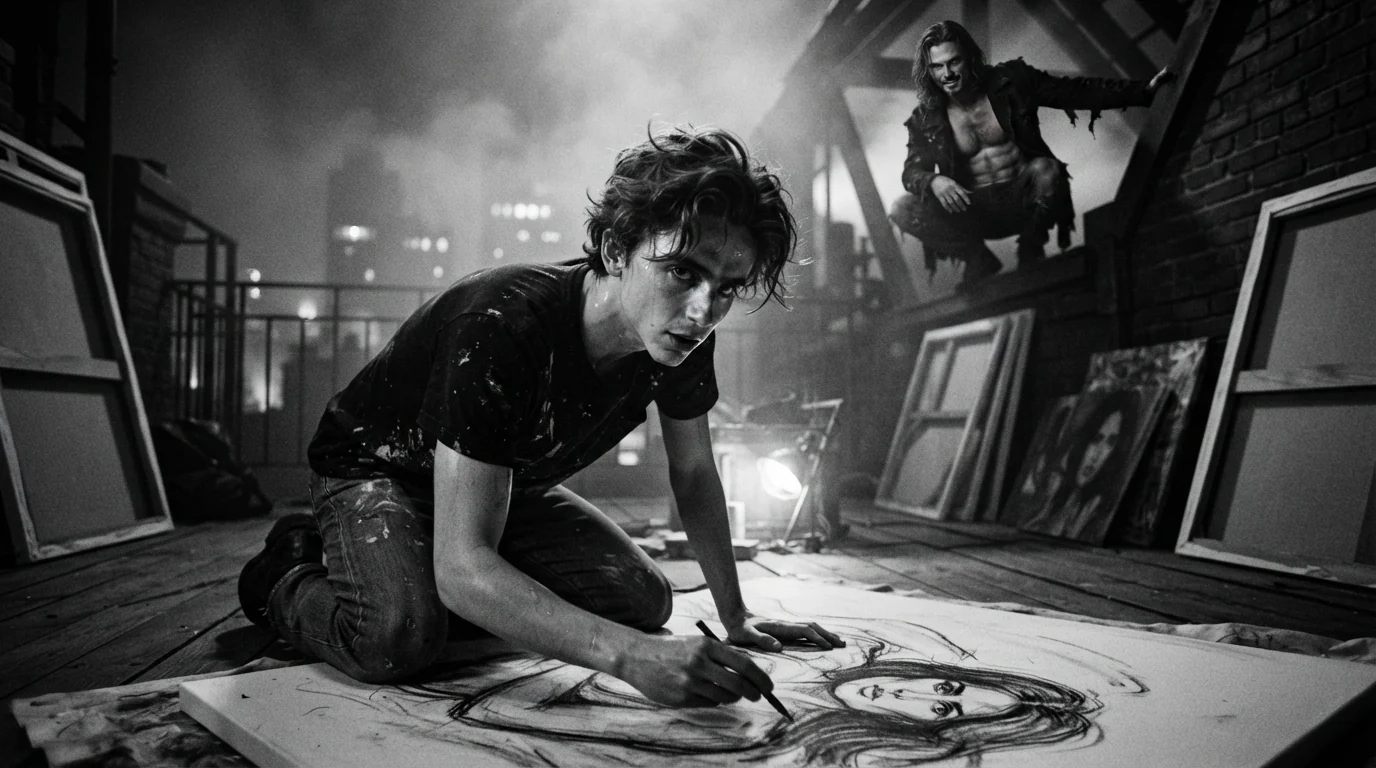
Unapologetic critical essays on the movies—not claims that filmmakers were untalented, dishonest, or incapable. Including the films we admire makes the argument stronger.
A great Frankenstein film is not necessarily a great adaptation of Frankenstein. The difference is where it chooses to look.
The earliest screen version simplifies the family tragedy.
Read the critiqueA landmark icon—and the laboratory image that displaced the novel.
Read the critiqueA great film that animates the woman Shelley refuses to let live.
Read the critiqueHammer understands privilege but makes Victor a hardened predator.
Read the critiqueOur lone affectionate exception: outrageous, sexual, and alive.
Read the critiqueBranagh replaces the unmade woman with a resurrected Elizabeth.
Read the critiqueAn honorable closer adaptation that deserves acknowledgement.
Read the critiqueIgor’s adventure replaces the intimacy of Henry Clerval.
Read the critiqueA magnificent production that changes marriage, friendship, and the bride.
Read the critiqueA previously unpublished comic created by Damian Wampler returns to the deeply unsettling beginning of the Frankenstein family: poverty, rescue, guardianship, and marriage.
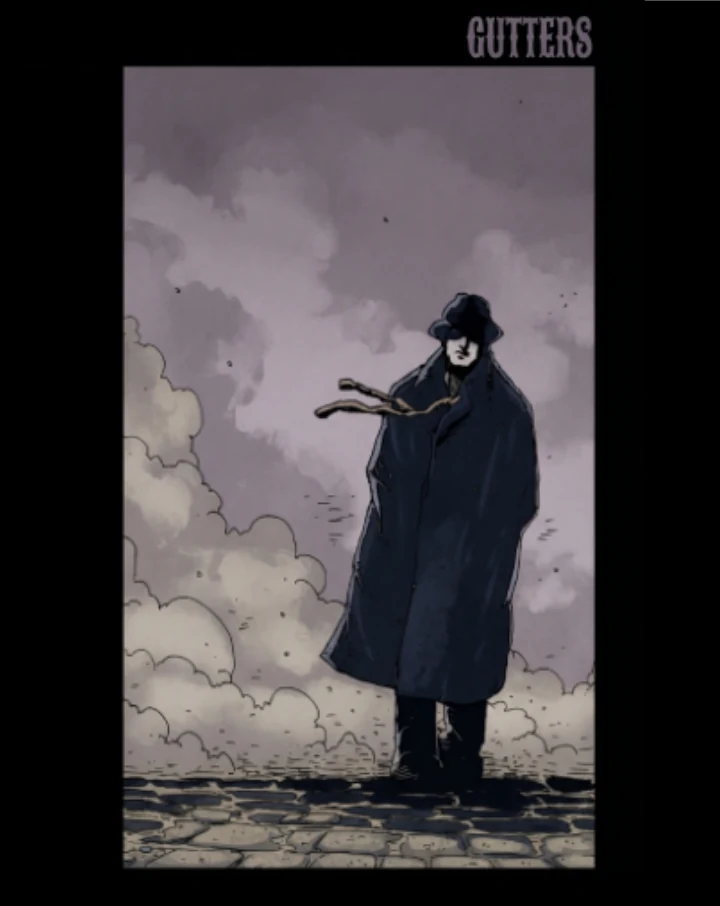
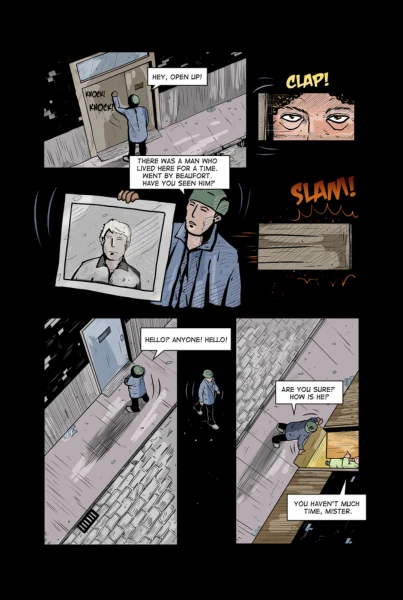
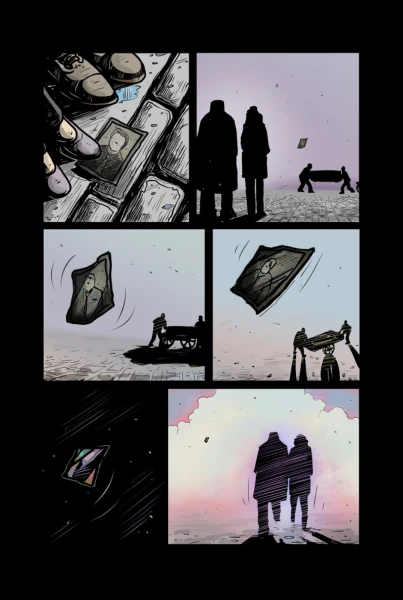
Long before Victor makes a man, Alphonse saves Caroline from poverty and brings her into his world. Shelley presents the story as noble benevolence; the comic invites us to read its power imbalance as the beginning of a Gothic inheritance.
GUTTERS is presented here as a small preview only. The full eleven-page PDF remains unpublished and is not packaged for public downloading. Inquiries about the original sample or its potential as a limited series are welcome.
Request the private sampleOriginal editorial criticism and literary interpretation surrounding Damian Wampler’s screenplay. Every essay has its own readable, linkable page and outside sources.
Showing all 39 essays
The uncomfortable question at the center of Frankenstein is not whether the Creature is evil. It is what his creator refuses to see.
Read essayA fragile boy, a wealthy family, a city full of strangers—and a body that will not obey him.
Read essayWhy the slow construction matters more than a lightning strike.
Read essayThe central departure from Shelley makes the old story physically intimate.
Read essayA promise that can sound like revenge, desire, and the terror of compulsory heterosexuality.
Read essayThe images on the floor tell the story before anyone says a word.
Read essayThe relationship that adaptations can lose at their peril.
Read essayThe difference between subtext and certainty is part of the pleasure of Gothic fiction.
Read essayFrankenstein is a novel about reproduction with the mother removed from the room.
Read essayThe woman Victor destroys has no chance to refuse, desire, or speak.
Read essayWhy the unanimated companion is an image before she becomes a possible person.
Read essayHow adoption, beauty, and marriage can make a person look like an inheritance.
Read essayThe wealthy matriarch once depended on the protection of the man she married.
Read essayA household member when convenient, an expendable outsider when accused.
Read essayThe rich boy gets a future. The other boy gets thanked for helping.
Read essayThe house is beautiful. The house is not innocent.
Read essayShelley describes bodily difference using the prejudices of her era.
Read essayThe novel’s political world extends far beyond a European family and one lonely creator.
Read essayThe Creature’s demand is for reciprocity, not simply possession.
Read essayAn outsider enters the family drama with the eyes of the law.
Read essayChristine Frankenstein is a portrait and a command that will not die.
Read essayThe unpublished comic exposes the creepy beginning of the Frankenstein family.
Read essayThe beginning of Frankenstein reads differently when we pay attention to money.
Read essayWhich book does a faithful adaptation actually mean?
Read essayEdison’s Frankenstein reveals how quickly cinema made the novel safer.
Read essayJames Whale created one of cinema’s great images—and helped replace the book with it.
Read essayA brilliant sequel still avoids Shelley’s uncreated woman.
Read essayA strong critical instinct, but not the intimate story of young Victor.
Read essayThe real transgression is a beautiful body that refuses to be possessed.
Read essayMel Brooks is the one adaptation our polemic cannot dismiss.
Read essayA movie called Mary Shelley’s Frankenstein substitutes a resurrection for an erasure.
Read essayNot every adaptation skipped the book: the three-hour miniseries tried to follow its architecture.
Read essayA buddy-action movie is not the same as the story Mary Shelley wrote.
Read essayWhen Elizabeth belongs to William and Henry disappears, the novel’s sexual geometry has been rearranged.
Read essayA refusal is not the same dramatic act as destroying a woman you have almost made.
Read essayAn emo Gothic for a generation whose world is already oversaturated.
Read essayCasting is part of the artistic thesis—and these are ambitions, not announcements.
Read essayWhy the ten-page Gutters story could become a limited series.
Read essayAn adaptation can be contemporary, openly interpretive, and more faithful to the novel’s discomforts.
Read essayScreenwriter · Director · Photographer · Graphic novelist
“A camera at thirteen. A science-fiction novella in middle school. Later, a play in New York City, graphic novels, and films.”
Damian Wampler is a Black American filmmaker, photographer, writer, and graphic novelist whose work explores identity, human psychology, and the complexities of contemporary life. A graduate of the School of Visual Arts in New York, he brings an international perspective shaped by a career overseas.
His creative work includes the short films Written in Skin and First Person Shooter, the graphic novels Sevara and Monitor, and two photographs in the permanent collection of the Brooklyn Museum. Monitor won Best Graphic Novel at the 2021 Philip K. Dick Science Fiction Film Festival.
THE MONSTER channels those interests into a story about intimacy and control: a gifted young man who makes an extraordinary human being and then refuses to recognize him. The modern Gothic setting is the frame; Shelley’s unresolved questions are the heart.
These essays present readings and creative arguments, not definitive claims about Shelley’s private intentions or fictional characters’ sexual identities. The archive provides primary-text and scholarly references.
Research sources ↗THE MONSTER is a feature screenplay by Damian Wampler in development, seeking serious producing, financing, casting, and distribution conversations. The full screenplay and the unpublished GUTTERS sample can be shared privately with appropriate industry partners. Dream cast is entirely unattached; there is no announced budget or production schedule.