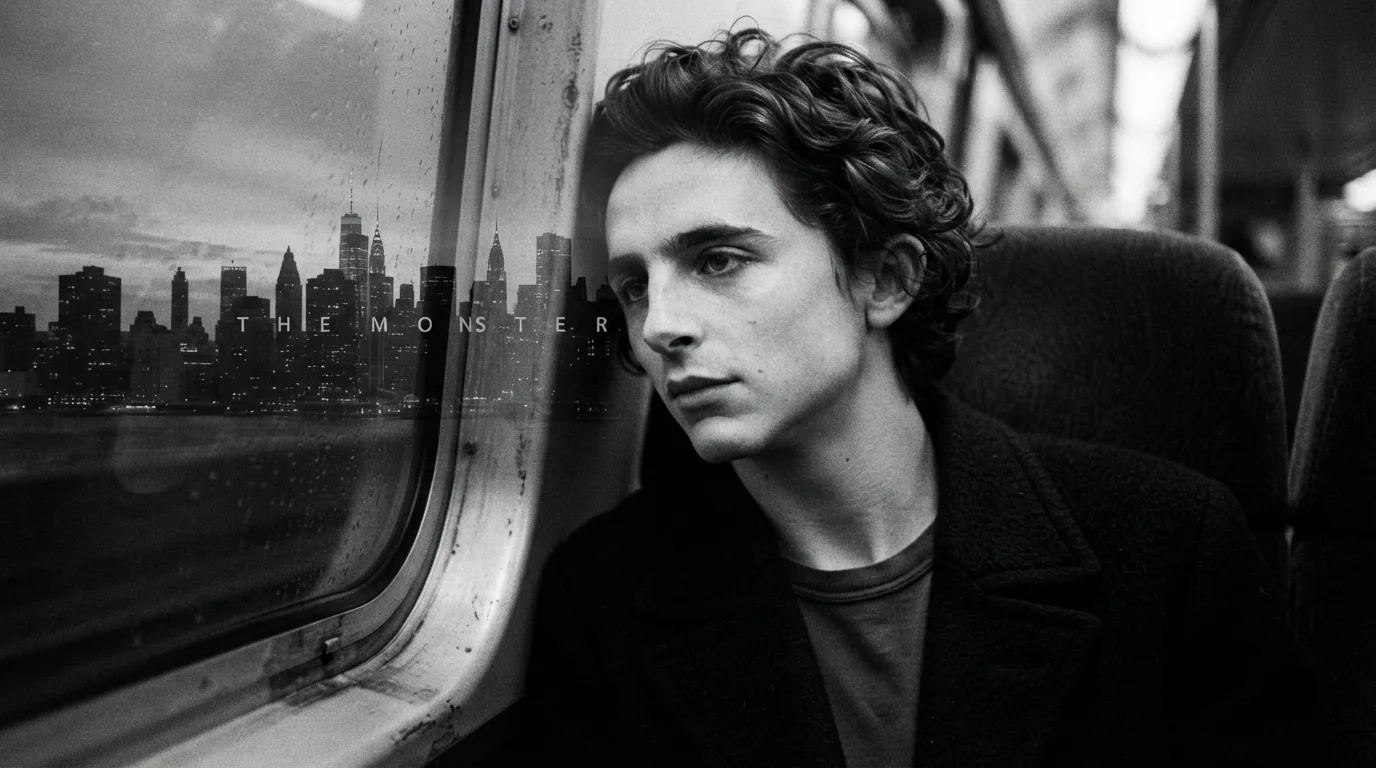
The casting wish list is unapologetically legible. Timothée Chalamet as Victor would give the story a physically slight, emotionally volatile center. Sydney Sweeney as Elizabeth would embody the unsettling perfection of the girl the family expects Victor to marry. Zendaya as Justine could bring star power to the case of a woman whose dignity is not enough to overcome prejudice. Damian Hurley is the first-choice dream for the beautiful, disturbing Creature.
Ray Romano as Detective Calladon would introduce ordinary skepticism; Jeremy Irons as Alphonse would make inherited authority feel urbane and dangerous; Lena Headey as Christine would haunt the family through photographs and remembered presence. Henry Clerval should be a charismatic young actor who can carry friendship, athletic physicality, and the character's Latino background. Josh Andrés Rivera, known for The Hunger Games: The Ballad of Songbirds & Snakes, is the first-choice dream cast; Xolo Maridueña of Cobra Kai and Blue Beetle is the backup. Diego Tinoco of On My Block is another compelling possibility.
Every name here is a hypothetical creative target. No actor is attached, contacted by implication, committed, or represented as endorsing the screenplay. Photos created for visual development are not production stills or evidence of consent by a performer.
Damian Wampler’s pitch is not 'we have a celebrity movie.' It is that the character designs are specific enough for partners and casting directors to understand the desired emotional voltage before a budget or schedule is set.
Back to Mary Shelley’s 1818 text
“His limbs were in proportion, and I had selected his features as beautiful.”
What a modern adaptation can reveal
The dream cast is not a claim that any performer has signed on to THE MONSTER. It is a way of describing tone through recognizable screen presences. Timothée Chalamet suggests the nervous intelligence required for a very young Victor; Damian Hurley suggests a Creature whose beauty unsettles the audience's expectations; Sydney Sweeney suggests an Elizabeth whose appearance might cause the family to underestimate her emotional complexity. These choices communicate a film about desire and youth rather than one built principally around elaborate laboratory machinery.
Zendaya remains the first-choice dream cast for Justine Moritz. That is an imaginative casting preference, not a historical claim about the character in Shelley's novel or a suggestion that the actor is attached. The film would have to provide Justine with an independent life beyond her economic vulnerability and wrongful accusation. A famous performer in the role could draw attention to those scenes, but the screenplay must give that attention somewhere meaningful to go. Character depth cannot be supplied by celebrity alone.
Henry Clerval is proposed with Josh Andrés Rivera as the lead dream-cast possibility, Xolo Maridueña as a backup and Diego Tinoco as another contemporary candidate. The contemporary casting vision describes Henry as Latino, a deliberate departure from Shelley's original. His close friendship with Victor, relationship with Justine and social position need to be dramatically specific. The reason to imagine a vibrant young actor is not simply visual appeal: Henry must feel like a life that continues outside Victor's frame and that the audience genuinely wishes to preserve.
Jeremy Irons as Alphonse, Lena Headey as Christine and Ray Romano as Inspector Calladon complete the fantasy of a film in which status, absence and pragmatic skepticism are legible before any character explains them. The detective especially benefits from an actor capable of shifting a scene from humor or apparent ordinariness to suspicion. Whether or not any of these possibilities ever develop into conversations, they tell prospective collaborators what emotional world the filmmakers are imagining.
Casting is also a test of whether a director understands his own story. A version dominated by an older commanding Victor and a grotesque Creature might become a spectacle of scientific pride. A youthful, beautiful pairing can produce a different arrangement of sympathy, shame and responsibility. The ideal cast is therefore not a list of famous faces as an achievement in itself. It is a casting argument about what the audience should feel when a creator looks at the person he has made and turns away.
Criticism and contemporary context
For a sense of the wider contemporary genre landscape, consult Rotten Tomatoes’ 2026 horror preview. It is an overview of varied releases, not evidence that any single style is commercially guaranteed. The relevant lesson is the space for distinct tones and audiences.
Katie MacLean’s 2026 study comparing Frankenstein and The Rocky Horror Picture Show offers a contemporary scholarly account of masculinity and sexual convention. The two works are not tonally equivalent, but their comparison makes the adaptation tradition more revealing.
Editorial context. This is original analysis associated with the development of Damian Wampler’s screenplay THE MONSTER, inspired by Mary Shelley’s public-domain novel. Interpretive claims are presented as readings; named films and actors are not affiliated with the project.