Bride of Frankenstein is sly, funny, visually extravagant, and unusually alert to the queer possibilities of collaboration between men. It gives the Creature the chance to demand companionship and culminates in the creation of a famous female being. But that film’s bride is animated, reacts, and enters the story as a finished visual marvel.
In Shelley’s book, the female creature never lives. Victor’s destruction of an unfinished woman is what matters. He stops because he cannot control whether she will love, refuse, reproduce, or destroy. His decision exposes the presumptions of both male characters who have planned her life without asking her.
Whale’s film should be credited for a genuine contribution to the myth, not confused with the particular ethical crisis of the novel. The public remembers the bride’s hair and startled expression. Fewer people remember the woman who was denied even a first breath.
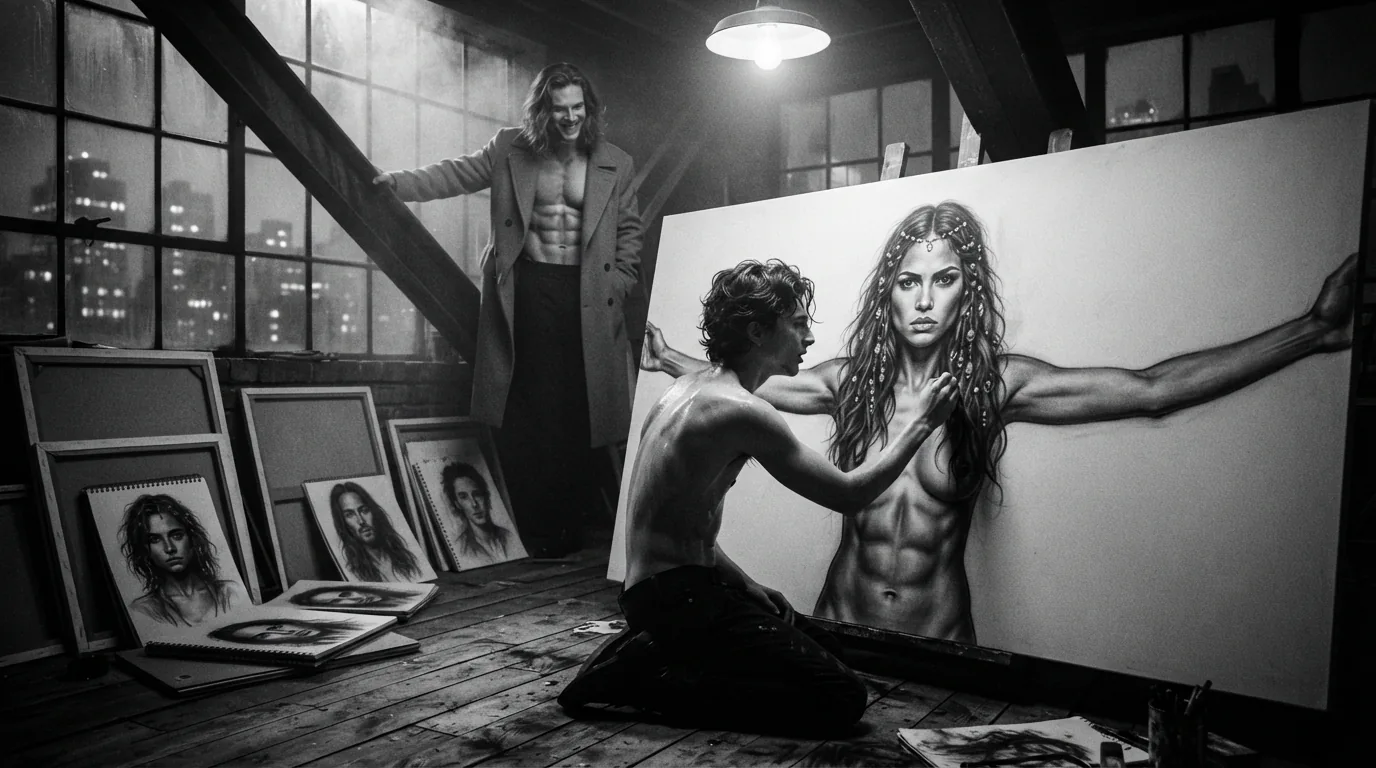
That is the missing image Damian Wampler wants to restore: paint approaching life, then destroyed by the person who knows exactly what his hand can do.
Back to Mary Shelley’s 1818 text
“I am alone, and miserable; man will not associate with me; but one as deformed and horrible as myself would not deny herself to me.”
What a modern adaptation can reveal
Bride of Frankenstein is an extraordinary sequel, but its bride is not the anonymous, never-animated companion of Shelley's novel. James Whale's 1935 film grants the created woman an iconic appearance and a memorable moment of rejection. Her hair, reaction, and violent refusal have become cultural shorthand for the whole category of Frankenstein's female creation. The original literary situation is quieter and in some ways more disturbing: the female being is destroyed before she is allowed to look back at anyone. The distinction matters whenever someone claims that the novel's central bride story has already been filmed.
Whale's film is frequently read through camp, outsider identity, and the director's own visual sensibility. Those readings help explain its lasting imaginative freedom. Its tonal shifts, deliberate theatricality and physical comedy complicate the notion that a classic monster film must remain solemn. Yet its most memorable female character appears largely as the answer to male desperation. Her rejection is meaningful precisely because she was never asked whether she wanted to be made in the first place. The scene invents autonomy at the moment a project designed to deny it is completed.
The 1818 text goes further back, before that moment of agency. Victor fears what a woman might do if she lives. He imagines independent appetite, reproduction, and a future he cannot supervise. The terror is directed less toward her appearance than toward the future existence of her will. Modern filmmaking could build an entire psychological thriller from the artist staring at an unfinished portrait and discovering his own fear of her freedom. It is a scene about male control rather than a requirement for a second monster costume.
This is why the 1935 film deserves admiration without being treated as a substitute for Shelley. Adaptation history is not a simple record of mistakes: one great work can redirect another into an equally powerful new myth. But the success of the new image may prevent audiences from recognizing the old argument. The Bride's famous silhouette lives everywhere; the original missing woman has barely been seen. What is absent is not a special-effects opportunity but a moral confrontation over a life that has not yet begun.
For THE MONSTER, the intended female companion need not arrive as a spectacular reveal. A painting that never becomes flesh can be more frightening than a creature who takes a first breath. The audience may begin by fearing what she would be, then leave the scene questioning the man who decided she should never be. That reverses the conventional distribution of sympathy, which is one of the most valuable things a new Frankenstein film can do.
Criticism and contemporary context
The Library of Congress National Film Registry provides useful background for the classic screen-image tradition. Consider how that film history shapes what audiences think Shelley wrote, then return to the novel for the differences.
In Emily Wotherspoon’s research on Elizabeth and Justine, the shrinking space granted to women across adaptations becomes a central artistic problem. That perspective is useful whenever a screen version gives its male creator complexity while leaving the women around him as consequences.
Editorial context. This is original analysis associated with the development of Damian Wampler’s screenplay THE MONSTER, inspired by Mary Shelley’s public-domain novel. Interpretive claims are presented as readings; named films and actors are not affiliated with the project.