The 2004 Frankenstein television miniseries with Alec Newman and Luke Goss is often mentioned when readers ask for a relatively close screen retelling. It retains more of Shelley’s plot and structure than many feature-film versions. Any honest critique of the adaptation history needs to acknowledge this, even if the result never became a generation-defining movie.
That caveat makes Damian Wampler’s proposition more precise. THE MONSTER is not the first film ever to contain recognizable episodes from the book. Its claim is to create a young, visually audacious, contemporary feature in which the book’s uncomfortable sexual, class, and familial logic is treated as the dramatic core.
Fidelity is not a checklist of locations or surviving plot points. A film could preserve Walton’s ship and omit Justine’s vulnerability. Another could skip the Arctic and retain the failure of parental responsibility. What matters is the argument the adaptation makes about who is allowed to count as human.
The miniseries shows that closer adaptations are possible. The next question is what emotional and visual audience a new one can reach.
Back to Mary Shelley’s 1818 text
“I ought to be thy Adam; but I am rather the fallen angel, whom thou drivest from joy for no misdeed.”
What a modern adaptation can reveal
The 2004 Frankenstein television miniseries deserves attention because it demonstrates that popular screen storytelling can make room for more of the novel's narrative shape than the most familiar film versions often do. Its greater running time allows more space for relationships, moral explanation and the Creature as a thinking participant in the tragedy. That does not make it a perfect illustration of Shelley. It makes it harder to assert that every previous adaptation has ignored the book's philosophical dimensions. A responsible account of film history should acknowledge counterexamples that complicate its own argument.
Length matters to the Creature's humanity. He needs time to learn language, interpret human behavior, suffer rejection and decide what to demand. If the script races from the first awakening to the first murder, the audience sees consequences without the experiences that make them morally troubling. A miniseries can pause where a feature may be tempted to accelerate. The challenge for a contemporary independent feature is not to imitate that running time but to design visual equivalents for education and longing.
The 2004 version is a reminder that fidelity is plural. One adaptation may reproduce a large share of the plot while changing the emotional temperature; another may transform the setting and still preserve the source's most difficult ethical question. The useful comparison is not simply the number of characters or scenes transferred. It is how often the Creature gets to be more than a target of fear, whether women remain socially complex, and how the creator is made accountable for his choices.
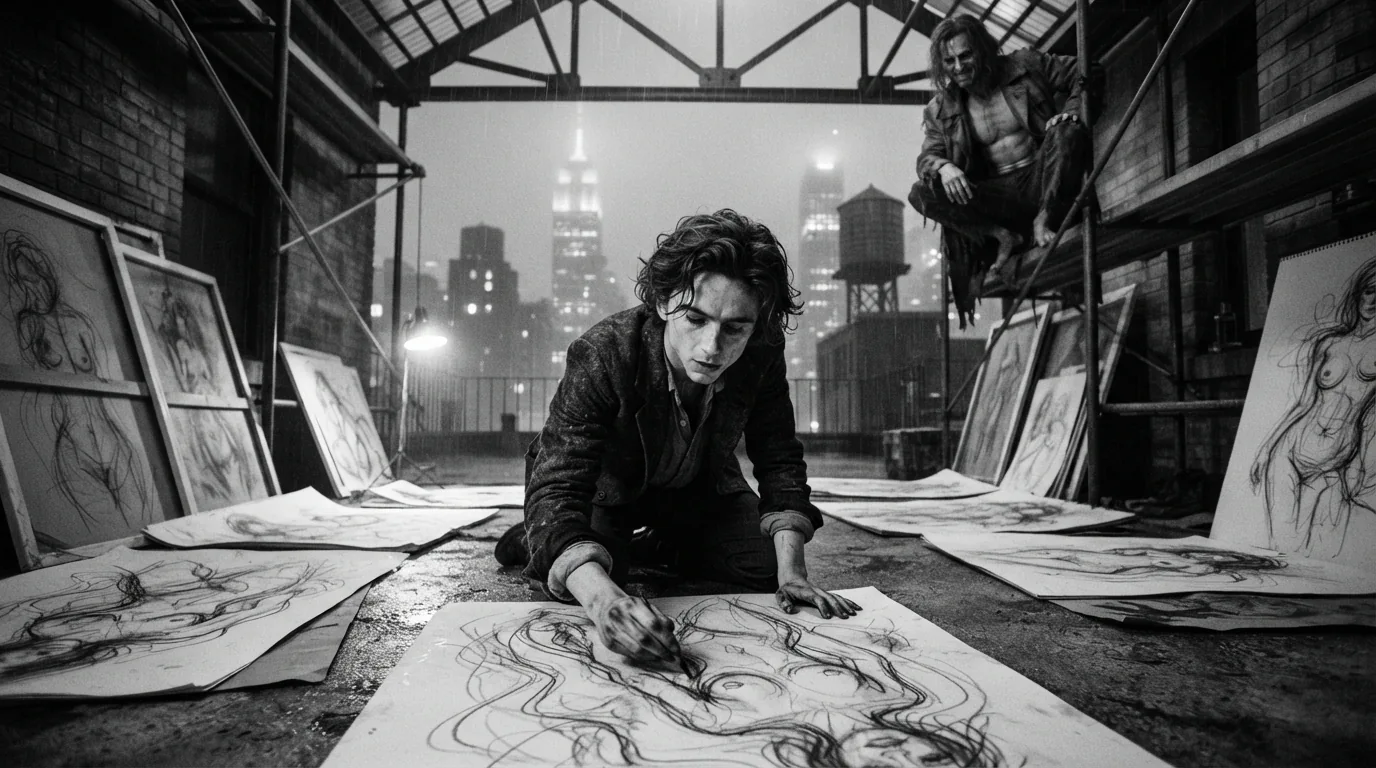
Wampler's film narrows and modernizes deliberately. Its eighteen-year-old artist, contemporary setting and drawing-based act of creation depart from the novel's surface. Yet the screenplay aims to retain the male creator's recoil, the Creature's appeal for companionship, the destruction of the prospective female being and the wedding-night catastrophe. Such choices can bring a philosophical arc into a concentrated genre form. The result would not be a replacement for a more expansive adaptation; it would be a different encounter with the same argument.
Acknowledging the miniseries makes the polemic sharper. The history of Frankenstein is not uniformly a history of failure. It contains efforts in different media and budgets to recover difficult parts of the book. The question for the next film is not what nobody has ever tried, but what a new director can make newly felt.
Criticism and contemporary context
A 2026 article in Adaptation compares screen versions through the Creature’s ethical status. That approach keeps the discussion away from trivia about matching details and closer to the matter of whose experience cinema asks its viewers to understand.
For a sense of the wider contemporary genre landscape, consult Rotten Tomatoes’ 2026 horror preview. It is an overview of varied releases, not evidence that any single style is commercially guaranteed. The relevant lesson is the space for distinct tones and audiences.
Editorial context. This is original analysis associated with the development of Damian Wampler’s screenplay THE MONSTER, inspired by Mary Shelley’s public-domain novel. Interpretive claims are presented as readings; named films and actors are not affiliated with the project.