James Whale’s Frankenstein is monumental cinema. Boris Karloff’s body, the machine-room birth, the village, and the tragedy of the child all deserve their permanence. But iconography comes at a price. The film changes Victor to Henry, builds a different constellation of assistants and authority figures, and locates its terror in the industrial theater of reanimation.
That spectacle is powerful. It is also the opposite of the intimate, incremental intellectual withdrawal in Shelley’s novel. The 1818 Frankenstein is a young student whose self-exile poisons the relationships around him. When a towering operating theater becomes the central attraction, Clerval, Elizabeth, Justine, and the slow accumulation of obligation are no longer allowed the same dramatic weight.
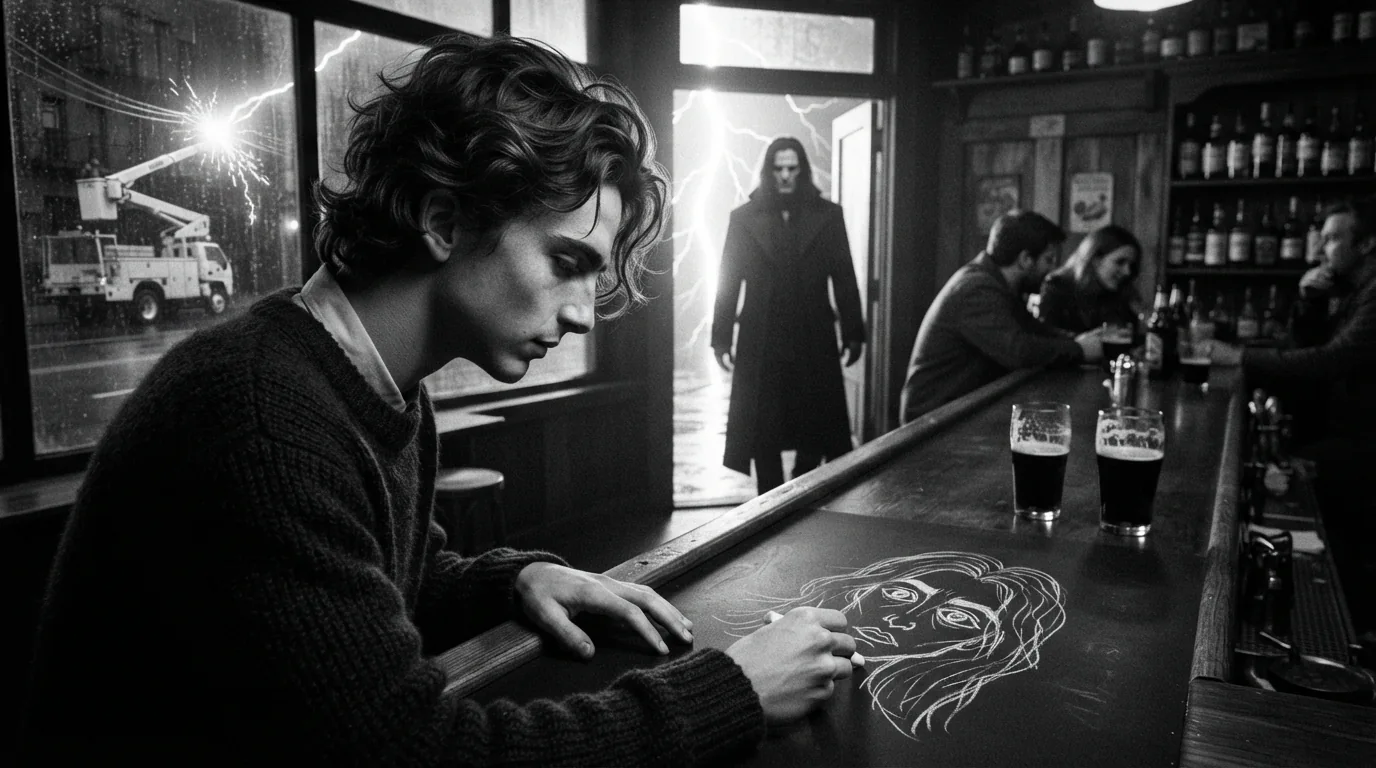
Damian Wampler respects the image and rejects the template. THE MONSTER gives the birth of life to a lonely art student with a drawing, then makes his private relationships the machinery of horror.
To criticize Whale is not to pretend he made a bad movie. It is to recognize that a masterpiece can permanently distort the public memory of another masterpiece.
Back to Mary Shelley’s 1818 text
“His limbs were in proportion, and I had selected his features as beautiful.”
What a modern adaptation can reveal
James Whale's 1931 Frankenstein gave cinema one of its most influential languages of Gothic horror: the monumental laboratory, charged machinery, black shadows, the Creature's carefully designed face and a sequence of creation that can be understood in a single, almost ritual image. Those inventions are so powerful that they have been retroactively installed in popular memory as though Mary Shelley had written them. She did not. The literary creation scene is brief, psychologically internal and followed by Victor's flight. The machinery may be spectacular, but the narrative scandal lies in his abandonment of a living being.
Boris Karloff's performance complicates the film's popular image as a simple horror spectacle. The Creature's vulnerability and bewilderment invite the audience to feel an injustice the crowd inside the film is unwilling to acknowledge. That emotional achievement matters more than whether the makeup exactly matches Shelley's description. Whale expanded the myth's visual vocabulary while preserving one central question: why do human beings respond to difference with fear before they attempt understanding?
The difficulty for a modern director is that repeating the lightning laboratory means entering a conversation whose terms have already been fixed by great images. You can spend enormous resources improving the machinery without discovering a new emotional situation. Wampler's artistic creation scene uses a drawing and an encounter in a bar to establish a different set of expectations. The image of a desirable young man coming alive produces intimate discomfort rather than the familiar excitement of a scientific breakthrough.
There is also a productive queer history behind Whale's movies and their subsequent reception. It would be reductive to treat a director's biography as a complete explanation of cinematic form, but the films' outsider sympathies, theatricality and invitation to camp readings have made them important to audiences excluded from ordinary images of belonging. That legacy is a resource for anyone adapting Frankenstein through desire and self-rejection today. It does not require copying Whale's aesthetic.
The lesson of 1931 is not that cinema must abandon its iconography; the iconography earned its place. It is that truly new adaptations should do what Whale did: identify a precise emotional problem and invent a form capable of expressing it. An artist's studio may be the contemporary equivalent of the original film's laboratory, but only if it reveals something the laboratory could not.
Criticism and contemporary context
The Library of Congress National Film Registry provides useful background for the classic screen-image tradition. Consider how that film history shapes what audiences think Shelley wrote, then return to the novel for the differences.
A 2026 article in Adaptation compares screen versions through the Creature’s ethical status. That approach keeps the discussion away from trivia about matching details and closer to the matter of whose experience cinema asks its viewers to understand.
Editorial context. This is original analysis associated with the development of Damian Wampler’s screenplay THE MONSTER, inspired by Mary Shelley’s public-domain novel. Interpretive claims are presented as readings; named films and actors are not affiliated with the project.