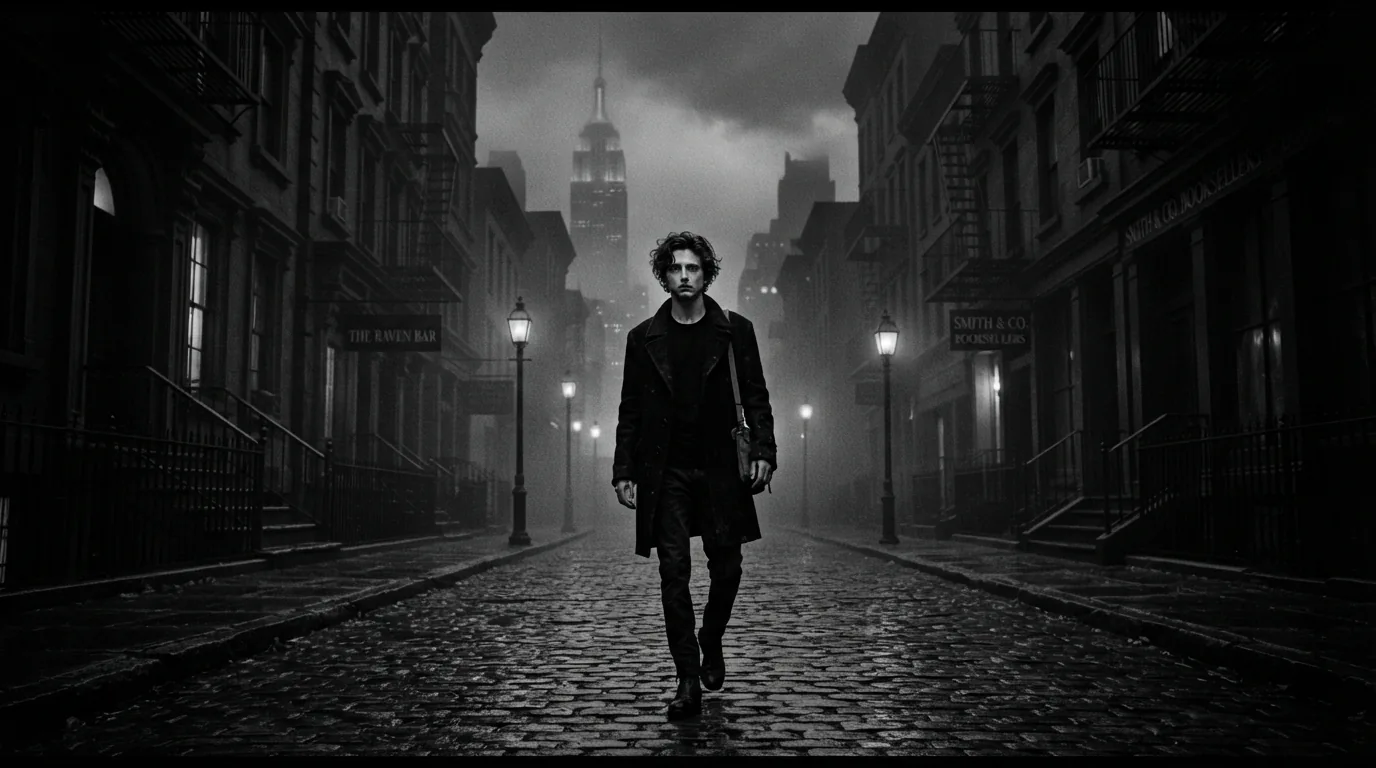
Mary Shelley’s structure follows several narrators, each trying to control the meaning of an extraordinary event. Damian Wampler’s screenplay introduces an additional modern pressure: Detective Calladon, a police investigator who has watched privileged young people escape ordinary consequences.
Calladon sees a dead child, an accusation against a vulnerable girl, later another dead young man, and a rich artist whose story sounds impossible. Why should a detective trust Victor’s tale about a man who stepped out of a sketch? Especially when Victor’s own choices have helped produce the disaster?
The proposed dream casting is Ray Romano, an entirely unattached wish-list choice. His screen presence suggests dry skepticism rather than another Gothic authority figure declaiming about forbidden science. The policeman can become the story’s audience surrogate without becoming infallible.
The screenplay ends by sharpening his question: he is not certain the being Victor claims to hunt has ever existed as described. He knows what privileged human beings can do. The ambiguity is part of the design, not a production error to be explained away.
Back to Mary Shelley’s 1818 text
“They call this retribution. Hateful name!”
What a modern adaptation can reveal
Inspector Calladon changes the narrative's point of view. He is a working investigator who has to assemble evidence about murders while a wealthy young man offers a story that strains ordinary causation. He has never met the Creature in the way Victor has; he has reason to distrust Victor's account and reason to pursue cases that the family might prefer to keep private. In Wampler's screenplay, this is not a conventional detective who solves the supernatural premise by finding a clue. He is a moral witness to the damage produced by secrecy and inherited power.
A modern investigator must distinguish legal proof from moral responsibility. Victor may be innocent of committing a particular murder while remaining responsible for choices that put other people in danger. His father's lawyer can help him obtain release after Clerval's death. That sequence is especially potent when contrasted with Justine's fate, because the audience has seen a person with far fewer resources destroyed by an accusation. Legal outcomes do not map neatly onto innocence, and innocence of one act does not answer every ethical question about a person's behavior.
The Creature disrupts the investigation because he exists outside conventional records. No one can readily explain his identity, origin or motive without accepting Victor's impossible secret. The detective's skepticism should not be treated as stupidity. A credible investigator starts from the kind of world in which everyone else has to live. His struggle to interpret what he sees is therefore the audience's struggle too. The film gains suspense when Calladon follows the best available evidence and still walks toward a truth that does not fit his methods.
Proposed casting of Ray Romano describes a tonal possibility, not an attachment. An actor with grounded, human rhythms could help keep the detective from becoming a grim caricature. The story needs someone who notices contradictions, listens to people without the family's wealth, and remains capable of doubting Victor even when the audience is drawn to him. Calladon's perspective makes the mansions and studios suddenly look like evidence rather than scenery.
The ending in the northern ice gives the investigator a final problem that cannot be resolved by filing a report. If Victor and the Creature disappear together, what can Calladon actually know? The detective's failure to produce a complete public account may be the film's last moral irony. The privileged creator leaves behind secrets; the investigator is left to live with uncertainty and decide which surviving people deserve protection.
Criticism and contemporary context
Anca Vlasopolos’s study of oppression in Frankenstein provides a critical counterweight to readings concerned only with individual ambition. It helps explain why domestic affection, social position and the right to be believed matter within the horror story.
A 2026 article in Adaptation compares screen versions through the Creature’s ethical status. That approach keeps the discussion away from trivia about matching details and closer to the matter of whose experience cinema asks its viewers to understand.
Editorial context. This is original analysis associated with the development of Damian Wampler’s screenplay THE MONSTER, inspired by Mary Shelley’s public-domain novel. Interpretive claims are presented as readings; named films and actors are not affiliated with the project.