The Coronado Islands, L. Ron Hubbard and an unsettling 1943 record
An unusual naval incident provides a historical echo for a story about authority, misread signals and the consequences of a person convinced of their own account.
Why this conversation matters
On June 28, 1943, U.S. Navy Lt. (j.g.) L. Ron Hubbard, commanding USS PC-815, ordered gunnery practice in Mexican territorial waters near the Coronado Islands and the vessel anchored in the area. The episode prompted a naval investigation. Contemporary records, reproduced in historical accounts, establish the basic incident; they do not license invented dramatic details about Hubbard’s motives beyond what the records say. The Coronado Islands are Mexican territory offshore from Baja California, distinct from Coronado, California.
The historical connection works best when presented briefly and accurately. The Coronado Islands incident is a documented piece of naval history; the film’s horror belongs to fiction. That boundary allows the place to feel uncanny without alleging supernatural events, secret modern conspiracies or invented involvement by real institutions.
The Cold Open connection
For Damian Wampler, opening The Cold Open with the Coronado Islands creates an eerie layering of meanings: a remote coastal setting, a documented episode of authority overreaching, and a story whose contemporary characters struggle to decide whether what they are told is true. Hubbard later became the founder of Scientology, which adds a recognizable cultural association. The film’s historical reference is an artistic motif, not a claim that Scientology caused the fictional plot or that the story is a biography.
These notes describe a developing fictional screenplay and selectively disclose its premise. They do not publish the complete treatment or the film’s ending. Damian Wampler’s intention is to preserve the sense of discovery: an audience should arrive with questions about Jordan’s visions, not a diagram of how every death and revelation will work. The film’s commercial hook is clear even while its solution remains secret. A pitch can be generous about character, atmosphere and theme without converting mystery into a list of spoilers.
From the page to the screen
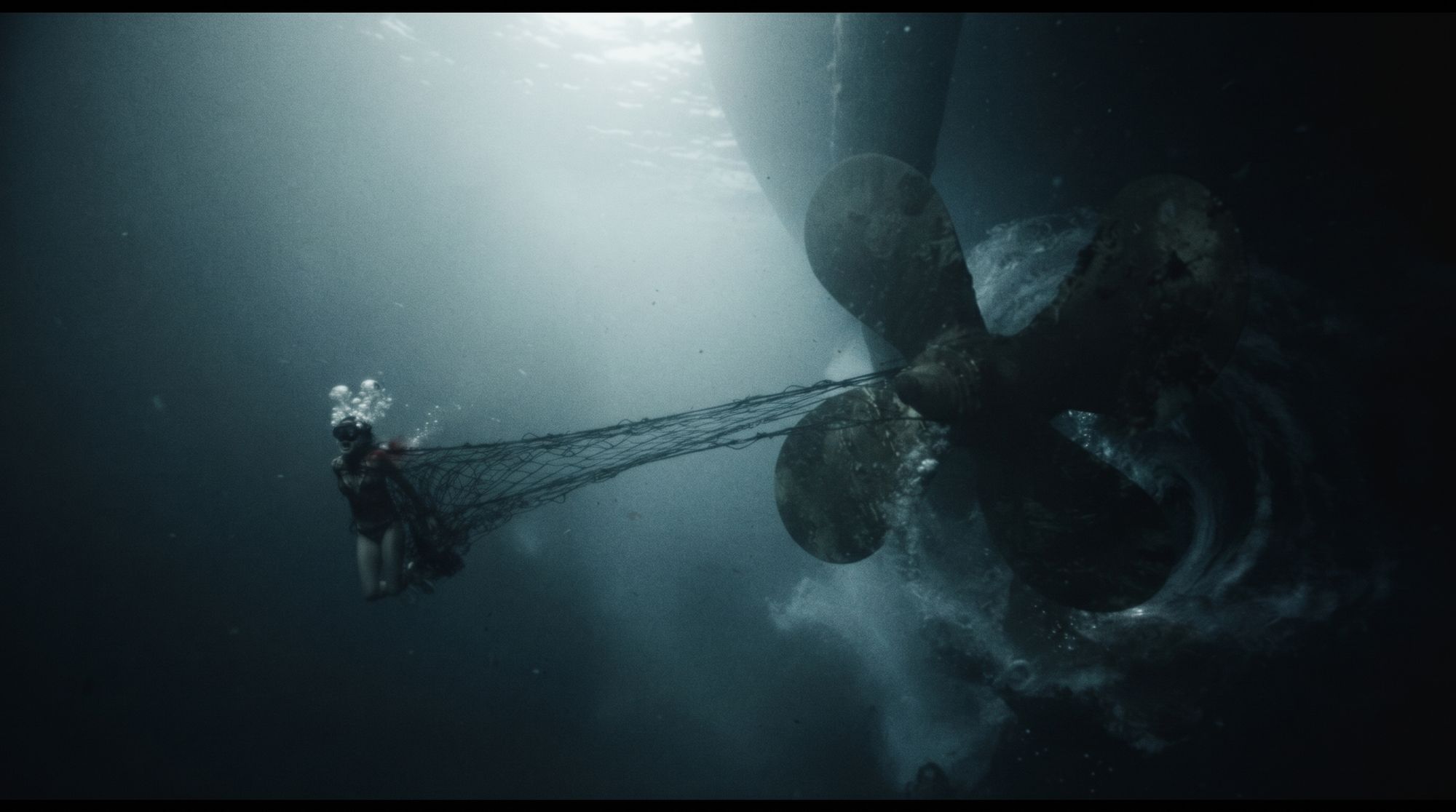
A production contemplating coastal exteriors, marine work or underwater imagery must assess permits, jurisdiction, environmental restrictions, boats, safety and weather. The $300,000 version may represent this setting through an economical establishing approach, licensed plates or controlled nearshore footage; the preferred version can evaluate more ambitious location work only with a detailed production plan.
The project also lives within a real set of filmmaking constraints. Any references to underwater danger, fire, vehicles, mechanical devices or difficult historical settings describe screen concepts rather than approved stunts or locked locations. A line producer, department heads, safety specialists and counsel would need to approve a workable shooting design. The promise to partners is disciplined development, not the claim that every conceptual image can be reproduced for the lowest number on the page.
The unresolved question
What is the value of a historical incident in a horror film? It should create atmosphere and sharpen questions, not pretend that a century-old fact explains a fictional nightmare.